
Philosophical works by Jeffrey Goodrich
Experience was
never extra.
Liberation was
never completion.
Two works on what appears to be missing—and the assumptions that made it look missing.
Explore the booksThe inquiry
Where a useful description begins to claim too much.
Jeffrey Goodrich writes compact philosophical works that identify the moment a practical or scientific description is promoted into an ontological conclusion it has not earned.
One concerns judgments of incompleteness. The other concerns the apparent addition of experience to neural physiology.
 Jeffrey Goodrich · 2026
Foundational work · Kindle and paperback available now
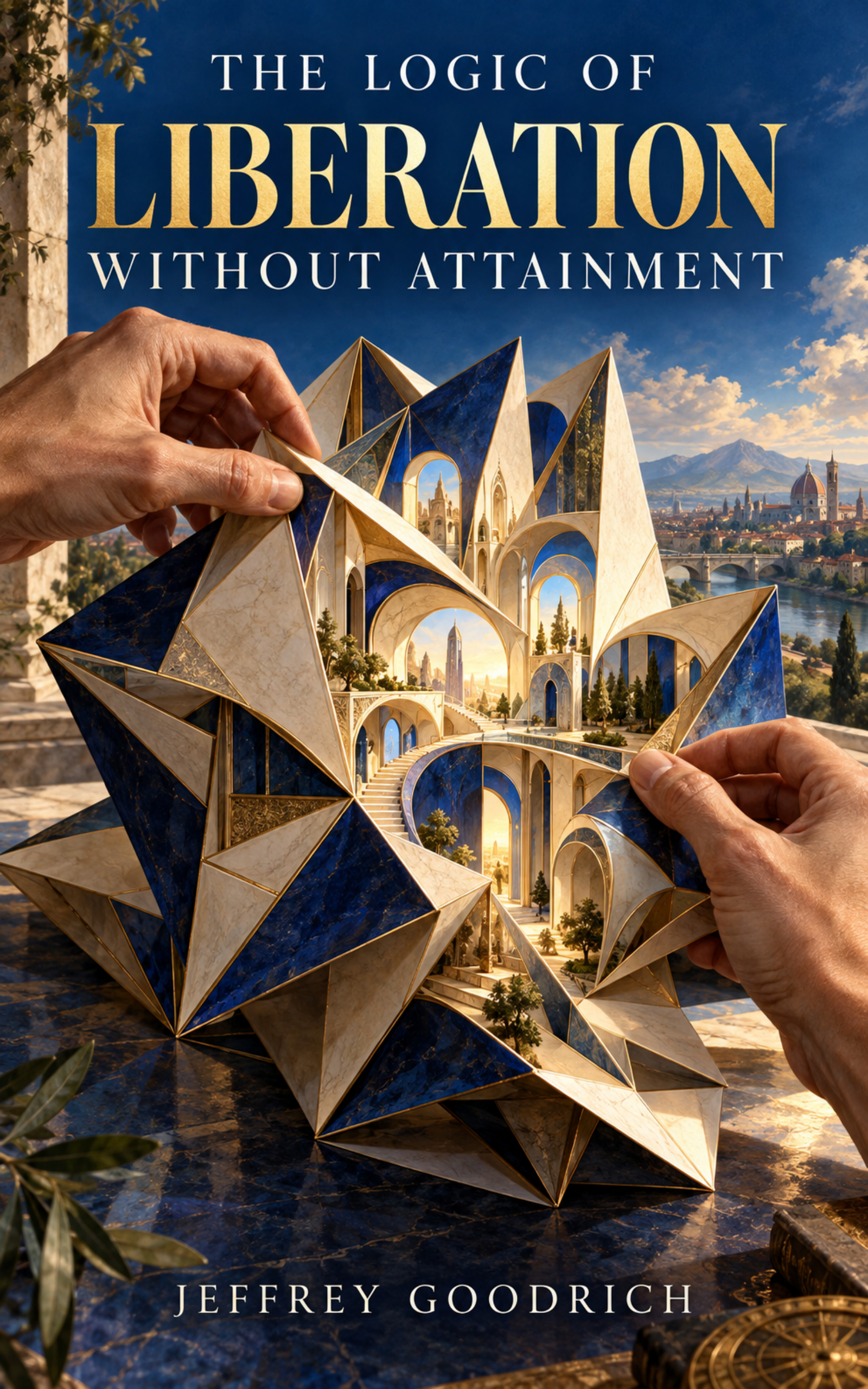
The Logic of Liberation Without Attainment
A judgment can be true without becoming a verdict on being.
The essay distinguishes the practical fact that something is incomplete for a purpose from the felt verdict that a person, life, or present occurrence is inherently incomplete—and follows that distinction into a form of liberation that confers no higher status.
Read the synopsisExistential capture establishes no inherent deficiency.
Liberation from existential capture establishes no inherent completion.
 Jeffrey Goodrich · 2026
New book · Available now
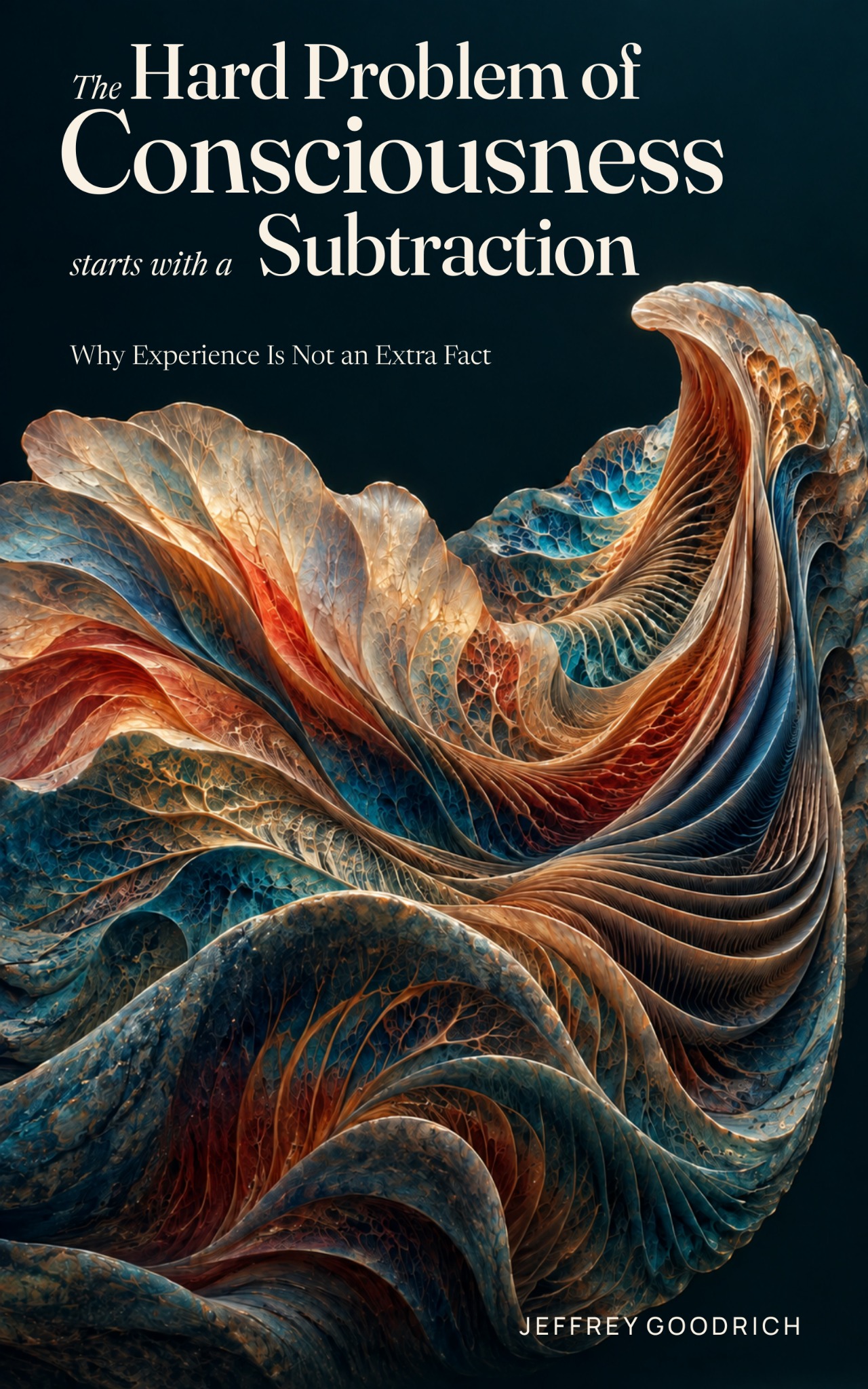
The Hard Problem of Consciousness Starts with a Subtraction
Why Experience Is Not an Extra Fact
Experience is not something added to a completed neural machine.
This monograph traces the apparent gap to a subtraction: physiology is first imagined as complete and nonexperiential, and experience is then demanded back as an additional fact. It proposes that familiar experience is the relevant integrated physiology presently happening. Undergoing, measuring, and describing it are different relations. Through measurement, neural organization, and the major objections to identity, the book asks what science would have to discover for that proposal to succeed or fail.
Explore the bookTwo distinct corrections
At the edge of description.
A bounded judgment can guide action without becoming a verdict on the being of what it judges.
A selective scientific record can represent a lived occurrence without exhausting what that occurrence is.
The books share a method: identify the conclusion the description did not establish, then ask what work genuinely remains.
Essays & films
The inquiry
continues.
The inquiry continues through essays on Substack and films on YouTube, exploring consciousness, actuality, and liberation.